
RM Auctions continued its strong track record for hosting successful single-vendor sales in Texas on the weekend , generating more than $7.4 million in sales, with 100 percent of lots sold at the Charlie Thomas Collection sale near Dallas, Texas.
Nilson wants more from Wall
Provincial Opposition NDP interim leader John Nilson says the throne speech to be delivered Thursday “has to be better” than the growth plan released by Premier Brad Wall last week.
[PICS] The 2014 C7 Corvette LT1 Reveal Presentation

We spent Wednesday morning at General Motors’ sprawling powertrain facility in Pontiac, Michigan. About 50 invited guests and media types were present for the 4 hour LT1 5th generation small block V8 presentation which included a tour of GM’s state of the art powertrain lab. Presenters included Corvette Chief Engineer Tadge Juechter, Small Block Chief Engineer and Program Manager Jordan Lee, and Assistant Small Block Chief Engineer John Rydzewski.
The day began at 7:30 with breakfast. Presentations by the gentlemen mentioned above followed at 8:30. From 11:00 until noonish we toured the GM Powertrain test lab. Our day wrapped up just before 1pm after a quick lunch and some mingling with our colleagues.
The GM Powertrain campus is occupied by roughly 3,000 engineers. The 450,000 square foot test lab has 120 flexible dynamometer test stands and 100 powertrain component test stands. It can pump 34 different types of fuels and reuses 15% of the power created by test engines to help run the campus.
The new 6.2L LT1 is the first engine to be released as part of the fifth generation of GM’s iconic small block V8. Expected horsepower and torque figures are estimated to be 450 each when the engine is officially certified next year. Some of the new technology in the LT1 includes: continuously variable valve timing (CVVT), active fuel management (AFM), direct fuel injection (DI), and an available dry sump oiling system. The LT1’s new combustion process will be featured in a (Society of Automotive Engineers (SAE) paper and formally presented next spring at the 2013 SAE Congress in Detroit.
As has been mentioned, this is the 3rd time in Corvette history in which an LT1 engine was offered. RPO LT-1 was first used in 1970-1972 and RPO LT1 (no hyphen this time) last ran from 1992 – 1996.
The 7th generation Corvette will be officially unveiled in all its glory on January 13th, 2013 at a private reveal. The public will get its first glimpse in the C7 on January 14th at the North American International Auto Show.
Click here to download the LT1 Engine Presentation [PDF].
Below are some of the photos we took during the LT1 Gen 5 V8 reveal presentation.
![[PICS] The 2014 C7 Corvette LT1 Reveal Presentation](http://www.corvetteblogger.com/images/content/2012/102512_1.jpg) |
![[PICS] The 2014 C7 Corvette LT1 Reveal Presentation](http://www.corvetteblogger.com/images/content/2012/102512_2.jpg) |
![[PICS] The 2014 C7 Corvette LT1 Reveal Presentation](http://www.corvetteblogger.com/images/content/2012/102512_3.jpg) |
![[PICS] The 2014 C7 Corvette LT1 Reveal Presentation](http://www.corvetteblogger.com/images/content/2012/102512_4.jpg) |
![[PICS] The 2014 C7 Corvette LT1 Reveal Presentation](http://www.corvetteblogger.com/images/content/2012/102512_5.jpg) |
![[PICS] The 2014 C7 Corvette LT1 Reveal Presentation](http://www.corvetteblogger.com/images/content/2012/102512_6.jpg) |
![[PICS] The 2014 C7 Corvette LT1 Reveal Presentation](http://www.corvetteblogger.com/images/content/2012/102512_7.jpg) |
![[PICS] The 2014 C7 Corvette LT1 Reveal Presentation](http://www.corvetteblogger.com/images/content/2012/102512_8.jpg) |
![[PICS] The 2014 C7 Corvette LT1 Reveal Presentation](http://www.corvetteblogger.com/images/content/2012/102512_9.jpg) |
![[PICS] The 2014 C7 Corvette LT1 Reveal Presentation](http://www.corvetteblogger.com/images/content/2012/102512_10.jpg) |
![[PICS] The 2014 C7 Corvette LT1 Reveal Presentation](http://www.corvetteblogger.com/images/content/2012/102512_11.jpg) |
![[PICS] The 2014 C7 Corvette LT1 Reveal Presentation](http://www.corvetteblogger.com/images/content/2012/102512_12.jpg) |
![[PICS] The 2014 C7 Corvette LT1 Reveal Presentation](http://www.corvetteblogger.com/images/content/2012/102512_13.jpg) |
![[PICS] The 2014 C7 Corvette LT1 Reveal Presentation](http://www.corvetteblogger.com/images/content/2012/102512_14.jpg) |
![[PICS] The 2014 C7 Corvette LT1 Reveal Presentation](http://www.corvetteblogger.com/images/content/2012/102512_15.jpg) |
![[PICS] The 2014 C7 Corvette LT1 Reveal Presentation](http://www.corvetteblogger.com/images/content/2012/102512_16.jpg) |
![[PICS] The 2014 C7 Corvette LT1 Reveal Presentation](http://www.corvetteblogger.com/images/content/2012/102512_17.jpg) |
![[PICS] The 2014 C7 Corvette LT1 Reveal Presentation](http://www.corvetteblogger.com/images/content/2012/102512_18.jpg) |
![[PICS] The 2014 C7 Corvette LT1 Reveal Presentation](http://www.corvetteblogger.com/images/content/2012/102512_19.jpg) |
![[PICS] The 2014 C7 Corvette LT1 Reveal Presentation](http://www.corvetteblogger.com/images/content/2012/102512_20.jpg) |
![[PICS] The 2014 C7 Corvette LT1 Reveal Presentation](http://www.corvetteblogger.com/images/content/2012/102512_21.jpg) |
![[PICS] The 2014 C7 Corvette LT1 Reveal Presentation](http://www.corvetteblogger.com/images/content/2012/102512_22.jpg) |
![[PICS] The 2014 C7 Corvette LT1 Reveal Presentation](http://www.corvetteblogger.com/images/content/2012/102512_23.jpg) |
![[PICS] The 2014 C7 Corvette LT1 Reveal Presentation](http://www.corvetteblogger.com/images/content/2012/102512_24.jpg) |
![[PICS] The 2014 C7 Corvette LT1 Reveal Presentation](http://www.corvetteblogger.com/images/content/2012/102512_25.jpg) |
![[PICS] The 2014 C7 Corvette LT1 Reveal Presentation](http://www.corvetteblogger.com/images/content/2012/102512_26.jpg) |
![[PICS] The 2014 C7 Corvette LT1 Reveal Presentation](http://www.corvetteblogger.com/images/content/2012/102512_27.jpg) |
![[PICS] The 2014 C7 Corvette LT1 Reveal Presentation](http://www.corvetteblogger.com/images/content/2012/102512_28.jpg) |
![[PICS] The 2014 C7 Corvette LT1 Reveal Presentation](http://www.corvetteblogger.com/images/content/2012/102512_29.jpg) |
![[PICS] The 2014 C7 Corvette LT1 Reveal Presentation](http://www.corvetteblogger.com/images/content/2012/102512_30.jpg) |
![[PICS] The 2014 C7 Corvette LT1 Reveal Presentation](http://www.corvetteblogger.com/images/content/2012/102512_31.jpg) |
![[PICS] The 2014 C7 Corvette LT1 Reveal Presentation](http://www.corvetteblogger.com/images/content/2012/102512_32.jpg) |
![[PICS] The 2014 C7 Corvette LT1 Reveal Presentation](http://www.corvetteblogger.com/images/content/2012/102512_33.jpg) |
Source:
General Motors
Related:
OFFICIAL: 2014 C7 Corvette to Feature 450hp 6.2 Liter V8; Revive LT1 Name
[VIDEO] Watch the 2014 C7 Corvette’s LT1 Engine Build Animation
Return of the LT1: 2014 C7 Corvette to Get 450hp V8 Engine
[VIDEO] Corvette’s Tadge Juechter and Kirk Bennion Talk about the C7 Corvette at Petit Le Mans
[VIDEO] Chevrolet Releases First 2014 C7 Corvette Teaser Video
[VIDEO] Corvette Racing and 2014 C7 Corvette Announcement from Petit Le Mans
Q&A with Corvette Chief Engineer Tadge Juechter and the LT1 Team On the Gen-5 Small Block V-8
“If we didn’t care about fuel economy, the car could be a lot lighter,” said Tadge Juechter, Chief Engineer/Vehicle Line Director for the Corvette.
OFFICIAL: 2014 C7 Corvette to Feature 450hp 6.2 Liter V8; Revive LT1 Name

As you already know, more pieces of the 2014 C7 Corvette puzzle came together Wednesday morning as GM officially unveiled the highly anticipated engine that will power the next-generation of America’s sports car. We’ve already seen the new C7 emblem and we can now officially report that a 6.2L direct injection V8 will motivate the upcoming 2014 Corvette. The new Corvette’s motor will bear the “LT1″ option code for the third time in its 60-year history.
“The Holy Grail for developing a performance car is delivering greater performance and more power with greater fuel economy and that’s what we’ve achieved,” said Tadge Juechter, Corvette chief engineer. “By leveraging technology, we are able to get more out of every drop of gasoline and because of that we expect the new Corvette will be the most fuel-efficient 450 horsepower car on the market.”
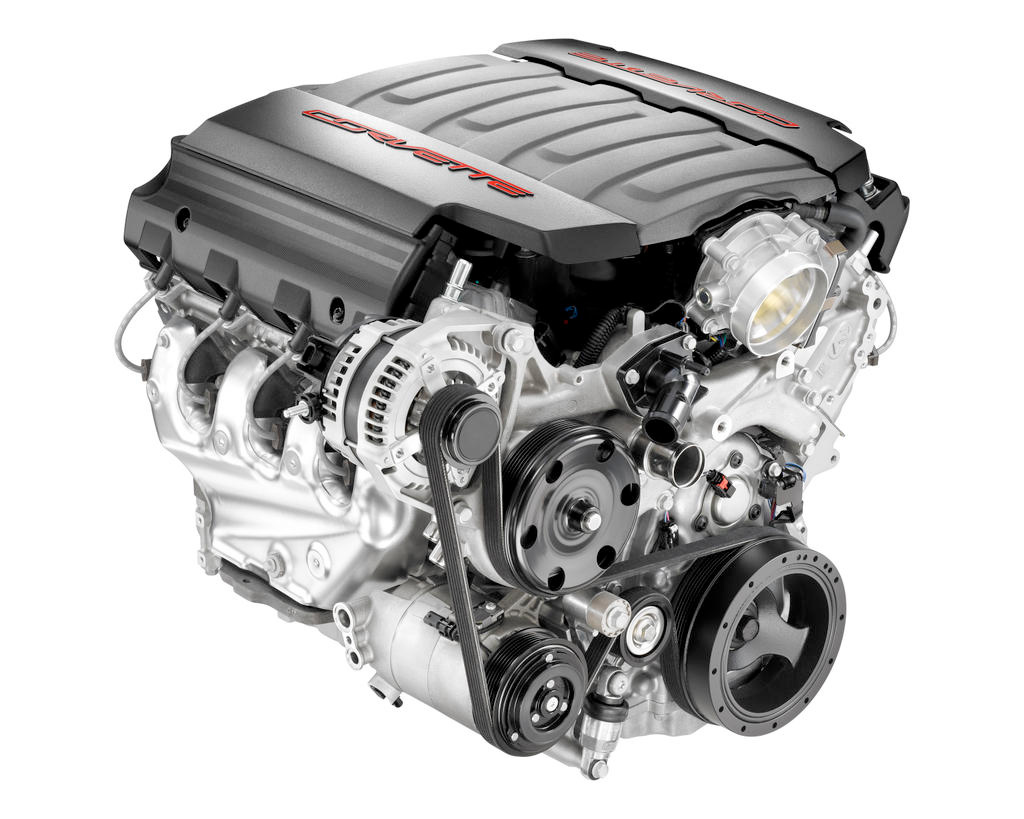
The LT1 is the first of the all-new 5th generation of small blocks and is packed full of technology. The quantity of carryover parts is so small that they’ll fit into a sandwich bag. Everything else is new. Here are a few of the highlights:
- The most powerful standard Corvette ever, with preliminary output of 450 horsepower (335 kW) and 450 lb.-ft. of torque (610 Nm)
- The quickest standard Corvette ever, with estimated 0-60 performance of less than four seconds
- The most fuel-efficient Corvette ever, exceeding the 2013 EPA-estimated 26 miles per gallon on the highway.
- Advanced combustion system optimized with 6 million hours of analysis
- Direct injection
- Active Fuel Management (AFM)
- Continuously variable valve timing
- 40 pounds lighter than BMW’s twin-turbo 4.4L, DOHC V-8 with similar output.
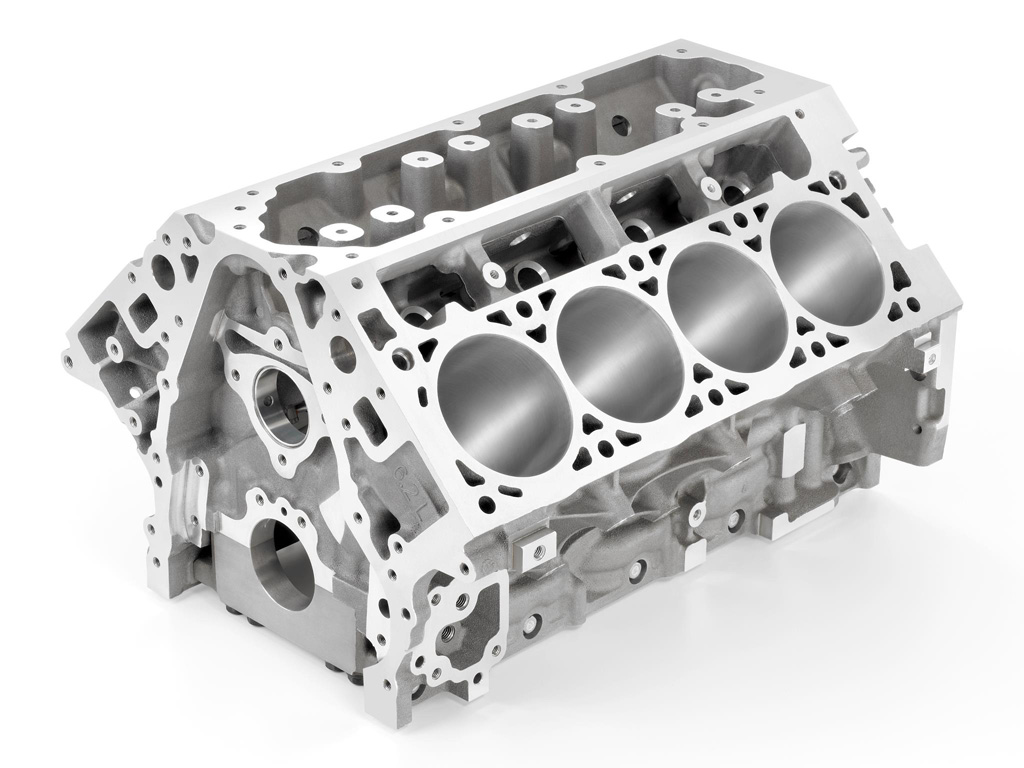
- All-aluminum block and oil pan
- Advanced oiling system, with available dry-sump system:
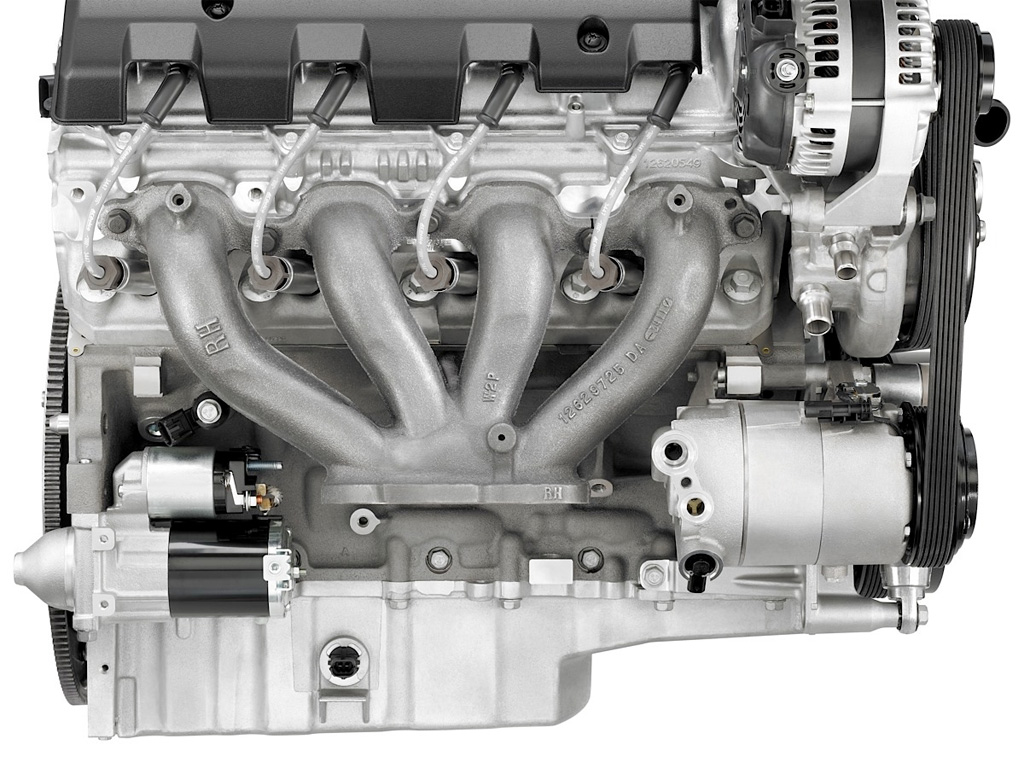
- Four-into-one exhaust manifolds
 |
 |
 |
 |
 |
 |
 |
 |
 |
 |
 |
 |
The 7th generation Corvette will be officially unveiled in all its glory on Sunday, January 13th, 2013 at a private reveal. The public will get its first glimpse in the C7 on Monday, January 14th at the North American International Auto Show.
Here is the official press release from GM:
All-New 2014 Corvette LT1 V-8 a Technological Powerhouse
- Advanced technologies including direct injection, active fuel management, continuously variable valve timing support advanced combustion system
- Preliminary output of 450 horsepower (335 kW) and 450 lb.-ft. of torque (610 Nm)
- Helps deliver estimated 0-60 performance in less than four seconds and best-ever fuel economy in the Corvette
DETROIT – When the all-new 2014 Chevrolet Corvette arrives late next year, it will be powered by a technologically advanced, racing-proven 6.2L V-8 delivering an estimated 450 horsepower and helping produce 0-60 times in less than four seconds.
The new Corvette LT1 engine, the first of the Gen 5 family of Small Block engines, combines several advanced technologies, including direct injection, Active Fuel Management and continuously variable valve timing to support an advanced combustion system.
“Our objective for the development of the all-new LT1 was to raise the bar for performance car engines,” said Mary Barra, senior vice president, global product development. “We feel that we have achieved that by delivering a true technological masterpiece that seamlessly integrates a suite of advanced technologies that can only be found on a handful of engines in the world.
“What makes this engine truly special is the advanced combustion system that extracts the full potential of these technologies. The art and science behind that combustion system make the Corvette LT1 one of the most advanced V-8 engines in the world,” said Barra.
Output, performance, and fuel economy numbers will not be finalized until early next year, but the new LT1 engine is expected to deliver:
- The most powerful standard Corvette ever, with preliminary output of 450 horsepower (335 kW) and 450 lb.-ft. of torque (610 Nm)
- The quickest standard Corvette ever, with estimated 0-60 performance of less than four seconds
- The most fuel-efficient Corvette ever, exceeding the 2013 EPA-estimated 26 miles per gallon on the highway.
“The Holy Grail for developing a performance car is delivering greater performance and more power with greater fuel economy and that’s what we’ve achieved,” said Tadge Juechter, Corvette chief engineer. “By leveraging technology, we are able to get more out of every drop of gasoline and because of that we expect the new Corvette will be the most fuel-efficient 450 horsepower car on the market.”
Advanced combustion system optimized with 6 million hours of analysis
“The Corvette LT1 represents the most significant redesign in the Small Block’s nearly 60-year history – building on its legacy to make one of the world’s best engines even better,” said Sam Winegarden, vice president, Global Powertrain Engineering. “More than just great horsepower, the LT1 has been optimized to produce a broader power band. Below 4,000 rpm, the torque of the Corvette LT1 is comparable to that of the legendary, 7.0L LS7 out of the current Corvette Z06. The LT1 is a sweetheart of a power plant and drivers will feel its tremendous torque and power at every notch on the tachometer.”
Increased power and efficiency were made possible by an unprecedented level of analysis, including computational fluid dynamics, to optimize the combustion system, the direct injection fuel system, active fuel management and variable valve timing systems that support it. More than 10 million hours of computational analysis were conducted on the engine program, including 6 million hours (CPU time) dedicated to the advanced combustion system.
Direct injection is all-new to the engine architecture and is a primary contributor to its greater combustion efficiency by ensuring a more complete burn of the fuel in the air-fuel mixture. This is achieved by precisely controlling the mixture motion and fuel injection spray pattern. Direct injection also keeps the combustion chamber cooler, which allows for a higher compression ratio. Emissions are also reduced, particularly cold-start hydrocarbon emissions, which are cut by about 25 percent.
- Active Fuel Management (AFM) – a first-ever application on Corvette – helps save fuel by imperceptibly shutting down half of the engine’s cylinders in light-load driving.
- Continuously variable valve timing, which GM pioneered for overhead-valve engines, is refined to support the LT1 AFM and direct injection systems to further optimize performance, efficiency and emissions.
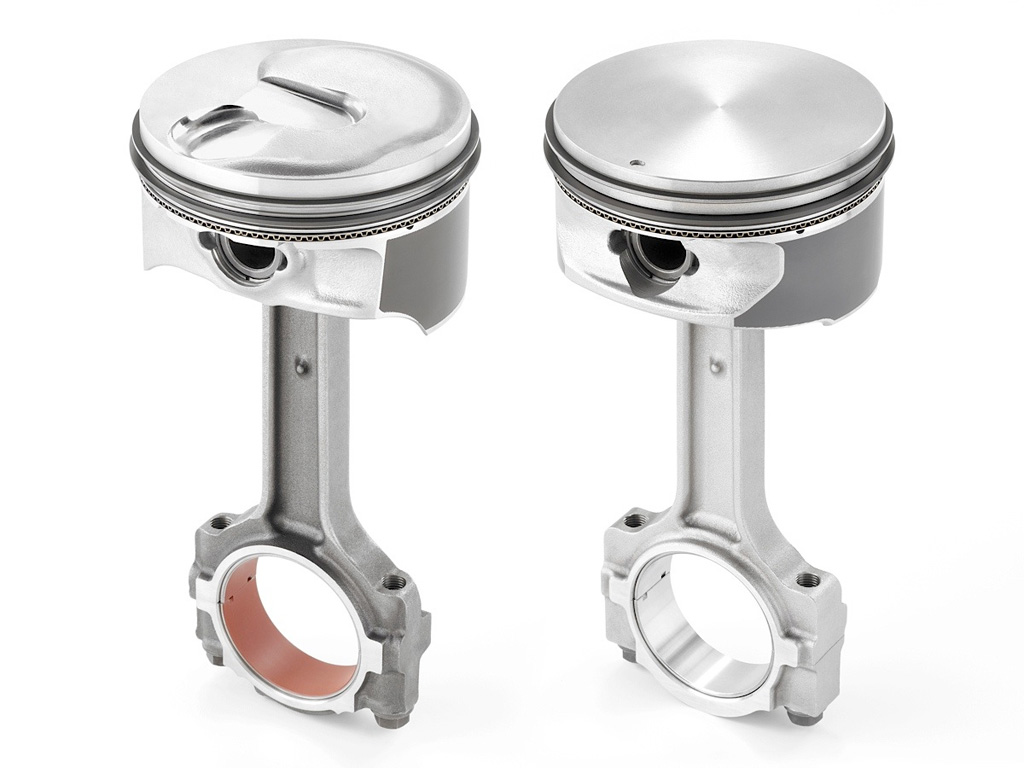
- These technologies support the all-new, advanced combustion system, which incorporates a new cylinder-head design and a new, sculpted piston design that is an integral contributor to the high-compression, mixture motion parameters enabled by direct injection.
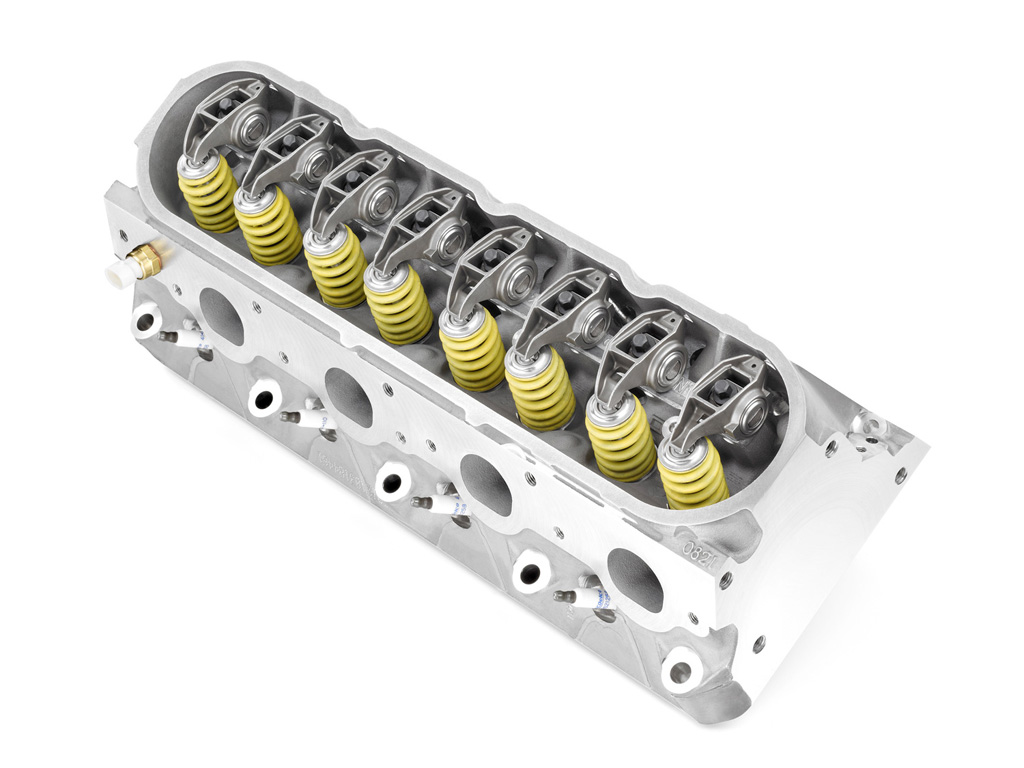
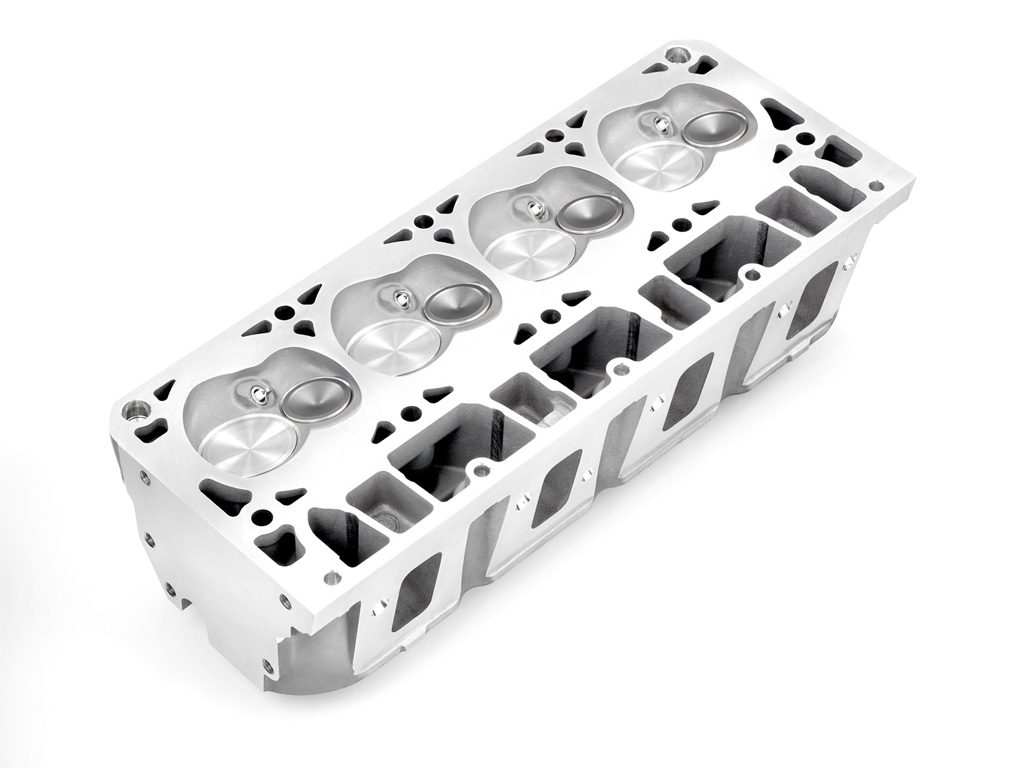
The LT1 head features smaller combustion chambers designed to complement the volume of the unique topography of the pistons’ heads. The smaller chamber size and sculpted pistons produce an 11.5:1 compression ratio, while the head features large, straight and rectangular intake ports with a slight twist to enhance mixture motion. This is complemented by a reversal of the intake and exhaust valve positions, as compared to the previous engine design. Also, the spark plug angle and depth have been revised to protrude farther into the chamber, placing the electrode closer to the center of the combustion to support optimal combustion.
The pistons feature unique sculpted topography that was optimized via extensive analysis to precisely direct the fuel spray for a more complete combustion. The contours of the piston heads are machined to ensure dimensional accuracy – essential for precise control of mixture motion and the compression ratio.
Race-proven legacy, state-of-the-art performance
The first Small Block V-8 debuted in the Corvette in 1955. It displaced 4.3L (265 cubic inches) and was rated at 195 horsepower, drawing air and fuel through a four-barrel carburetor. Five years later, V-8 power helped Corvette secure its first victory at the 24 Hours of Le Mans.
In 2012, the Small Block-powered Corvette Racing C6.R beat Ferrari, BMW and Porsche to sweep the drivers’, team, and manufacturer championships in production-based American Le Mans Series GT class. These championships make Corvette Racing the most successful team in ALMS history, with a total of 77 class wins, eight drivers’ championships, and nine manufacturer and team championships since 2001.
“The engine requirements for a production car and a race car are remarkably similar,” said Jordan Lee, Small Block chief engineer and program manager. “In both cases, you want an engine that is powerful and efficient, compact and lightweight, and durable. That combination is what made the original Small Block so successful. Today, the introduction of state-of-the-art technologies and engineering makes one of the best performance car engines in the world even better.”
As an example, the new LT1 engine is 40 pounds lighter than a competitor’s twin-turbo 4.4L, DOHC V-8 with similar output. That weight savings not only improves the Corvette’s power-to-weight ratio, but also contributes to a near-perfect 50/50 weight balance for enhanced steering response and handling.
The new LT1 is also four inches shorter in overall height than the competitive DOHC V-8. That also improves handling by lowering the center of gravity while enabling a low hood line – contributing to the Corvette’s iconic profile, as well as ensuring exceptional driver visibility.
The new LT1 is the third engine in the Corvette’s history to be so-named, with previous versions introduced in 1970 (Gen 1) and 1992 (Gen 2). All iterations of the LT1 – and all Small Block engines – have shared a compact design philosophy that fosters greater packaging flexibility in sleek vehicles such as the Corvette.
“The power and efficiency of the Small Block V-8 are hallmarks of Corvette performance,” said Lee. “But, the compact size and great power-to-weight are just as important for the overall driving experience. The all-new LT1 will play a huge role in making the all-new Corvette a world-class sports car, in terms of technology, performance, and refinement.”
Engine features and highlights
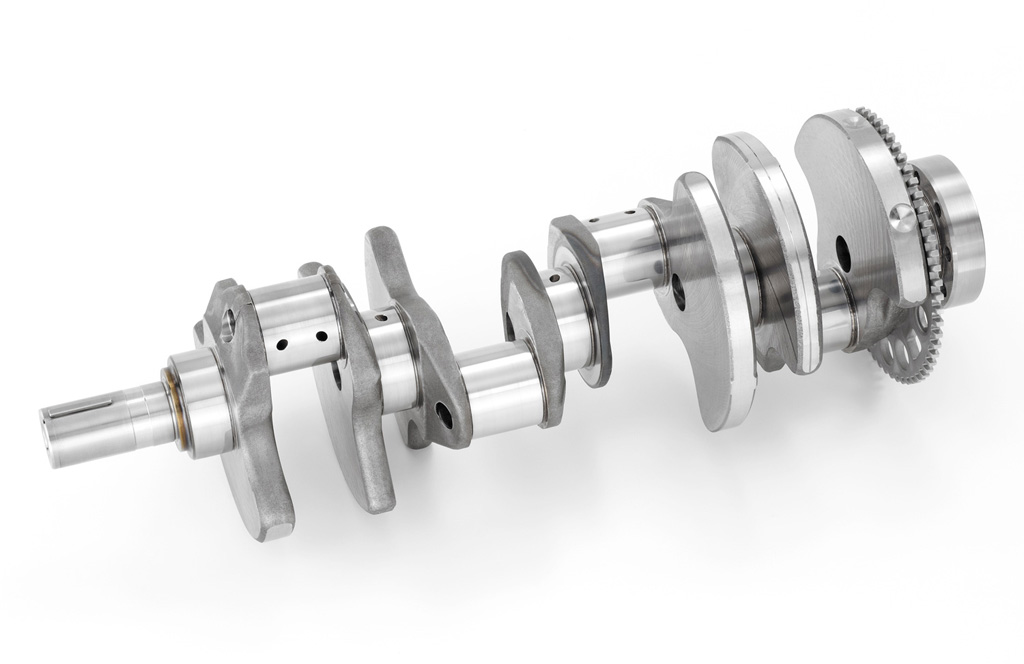
All-aluminum block and oil pan: The Gen 5 block was developed with math-based tools and data acquired in GM’s racing programs, providing a light, rigid foundation for an impressively smooth engine. Its deep-skirt design helps maximize strength and minimize vibration. As with the Gen 3 and Gen 4 Small Blocks, the bulkheads accommodate six-bolt, cross-bolted main-bearing caps that limit crank flex and stiffen the engine’s structure. A structural aluminum oil pan further stiffens the powertrain.
The block features nodular iron main bearing caps, which represent a significant upgrade over more conventional powdered metal bearing caps. They are stronger and can better absorb vibrations and other harmonics to help produce smoother, quieter performance.
Compared to the Gen 4 engine, the Gen 5’s cylinder block casting is all-new, but based on the same basic architecture. It was refined and modified to accommodate the mounting of the engine-driven direct injection high-pressure fuel pump. It also incorporates new engine mount attachments, new knock sensor locations, improved sealing and oil-spray piston cooling.
Advanced oiling system, with available dry-sump system:
The LT1 oiling system – including oil-spray piston cooling – was also optimized for improved performance. It is driven by a new, variable-displacement oil pump that enables more efficient oil delivery, per the engine’s operating conditions. Its dual-pressure control enables operation at a very efficient oil pressure at lower rpm coordinated with AFM and delivers higher pressure at higher engine speeds to provide a more robust lube system for aggressive engine operation.
Standard oil-spray piston cooling sprays the underside of each piston and the surrounding cylinder wall with an extra layer of cooling oil, via small jets located at the bottom of the cylinders. For optimal efficiency, the oil jets are used only when they are needed the most: at start-up, giving the cylinders extra lubrication that reduces noise, and at higher engine speeds, when the engine load demands, for extra cooling and greater durability.
An available dry-sump oiling system promotes exceptional lubrication system performance during aggressive driving maneuvers and high cornering loads. It includes two stages: a pressure stage and a scavenge stage. The pressure stage includes the new, dual-pressure-control and variable-displacement vane pump.
Dexos semi-synthetic motor oil, with a 5W30 specification, helps reduce friction to further enhance the LT1’s efficiency.
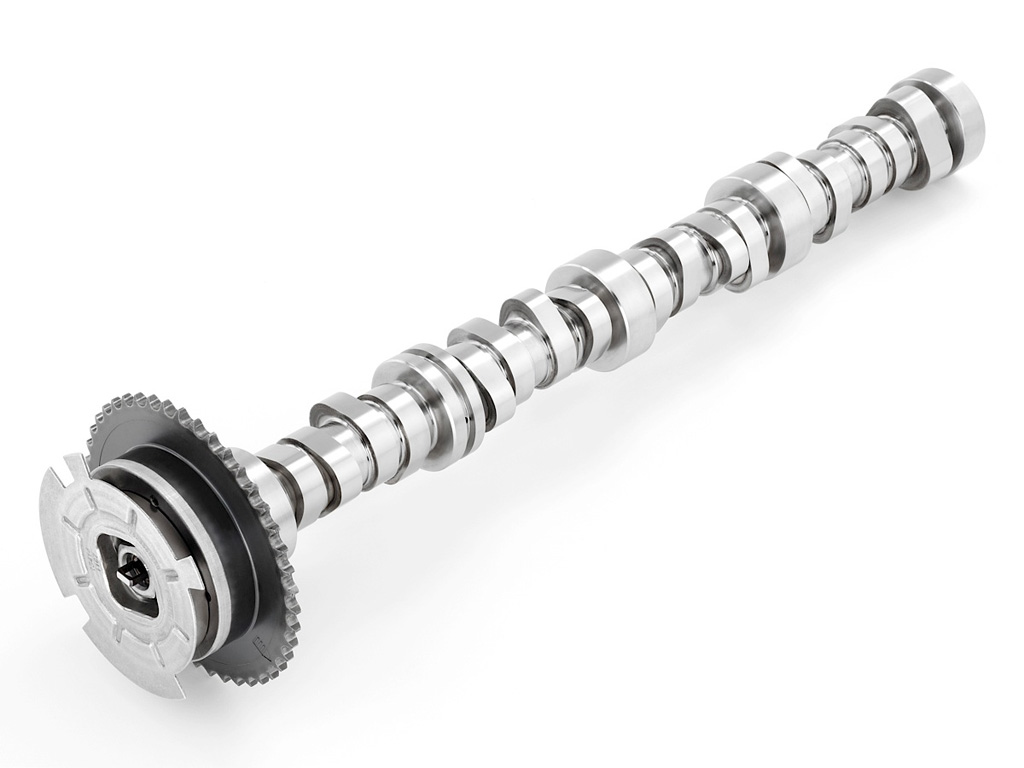
New, tri-lobe camshaft: Compared to the Gen 4 Small Block, the camshaft remains in the same position relative to the crankshaft and is used with a new rear cam bearing, but it features an all-new “tri-lobe” designed lobe which exclusively drives the engine-mounted direct injection high-pressure fuel pump, which powers the direct-injection combustion system. The cam’s specifications include 14mm/13.3mm (0.551/0.524-inch) intake/exhaust lift, 200/207-crank angle degrees intake/exhaust duration at 0.050-inch tappet lift and a 116.5-degree cam angle lobe separation.
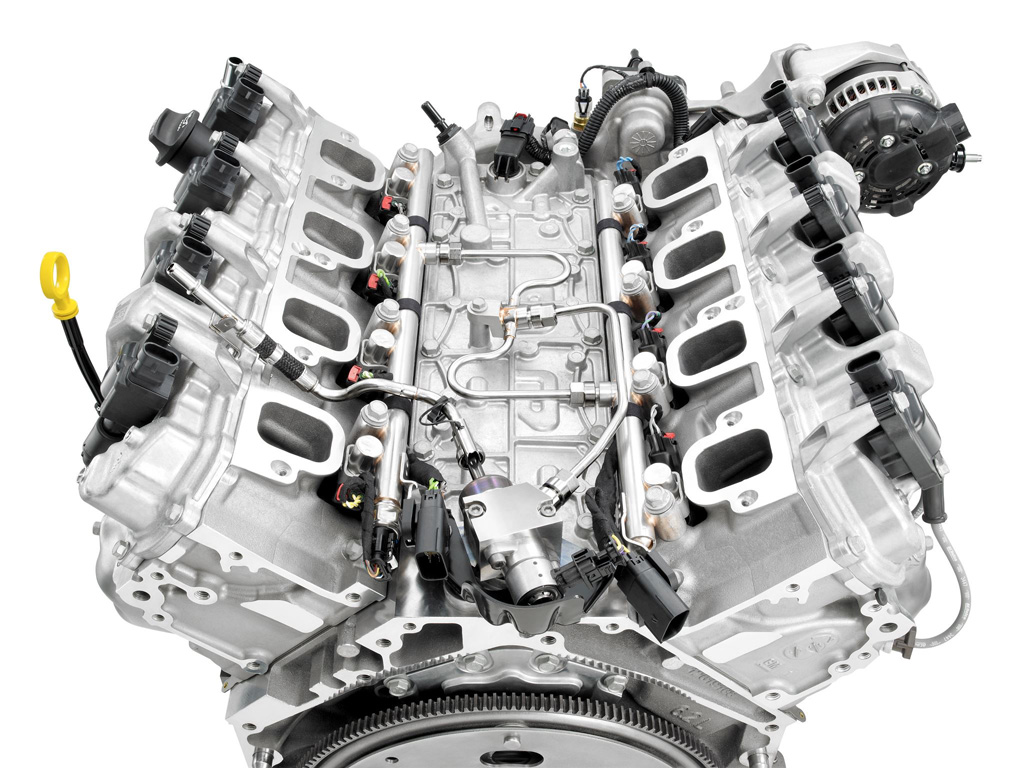
New, cam-driven fuel pump: The direct injection system features a very-high-pressure fuel pump, which delivers up to 15Mpa (150 bar). The high-pressure, engine-driven fuel pump is fed by a conventional fuel-tank-mounted pump. The direct injection pump is mounted in the “valley” between cylinder heads – beneath the intake manifold – and is driven by the camshaft at the rear of the engine. This location ensures any noise generated by the pump is muffled by the intake manifold and other insulation in the valley.
PCV-integrated rocker covers: One of the most distinctive features of the new engine is its domed rocker covers, which house the, patent-pending, integrated positive crankcase ventilation (PCV) system that enhances oil economy and oil life, while reducing oil consumption and contributing to low emissions. The rocker covers also hold the direct-mount ignition coils for the coil-near-plug ignition system. Between the individual coil packs, the domed sections of the covers contain baffles that separate oil and air from the crankcase gases – about three times the oil/air separation capability of previous engines.
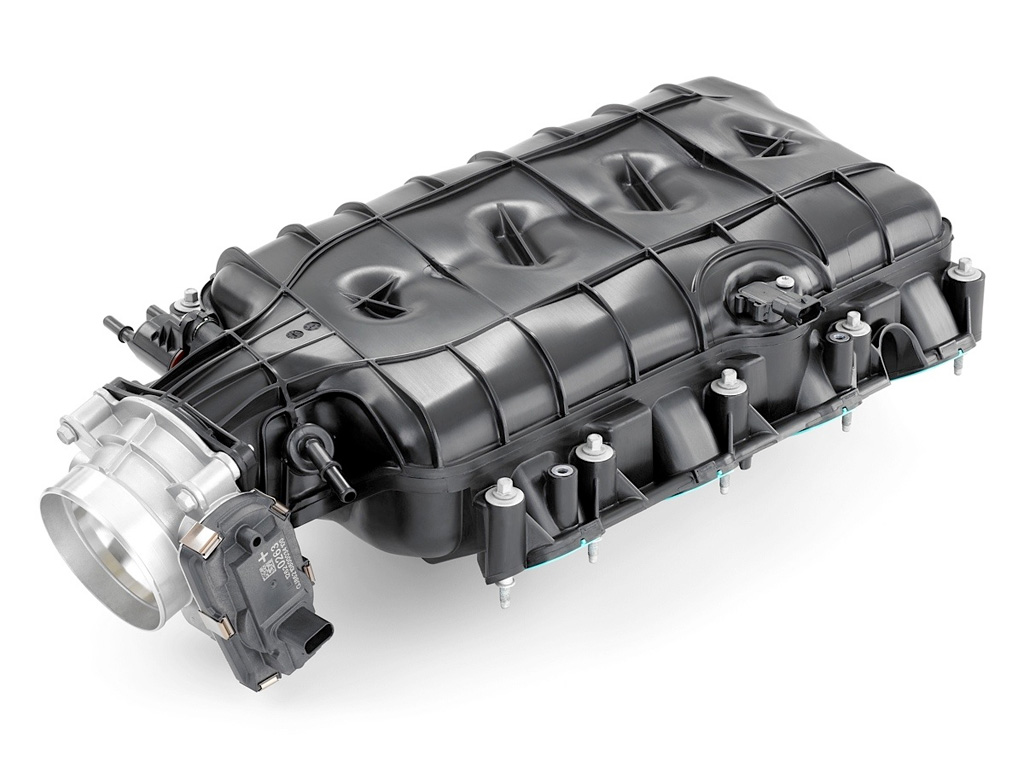
Intake manifold and throttle body assembly: The LT1’s intake manifold features a “runners in a box” design, wherein individual runners inside the manifold feed a plenum box that allows for excellent, high-efficiency airflow packaged beneath the car’s low hood line.
Acoustic foam is sandwiched between the outside top of the intake manifold and an additional acoustic shell to reduce radiated engine noise, as well as fuel pump noise.
The manifold is paired with an electronically controlled throttle, featuring an 87mm bore diameter and a “contactless” throttle position sensor design that is more durable and enables greater control.
Four-into-one exhaust manifolds: The LT-1 uses a cast version of the “four-into-one” short-header exhaust manifold design used on the Gen 4 LS7 engine. The cast header passages enable consistent exhaust flow into the “wide mouth” collector at the converter.
Cooling system, humidity sensor and more: Additional features and technologies of the Gen 5 Small Block include:
- A revised cooling system with an offset water pump and thermostat for more efficient performance
- Air induction humidity sensor ensures optimal combustion efficiency, regardless of the surrounding air’s humidity
- 58X ignition system with individual ignition coil modules and iridium-tip spark plugs
- All-new “E92″ engine controller.
General Motors’ investment in the Gen 5 Small Block will create or retain more than 1,600 jobs in five North American plants, including Tonawanda, New York, which recently received upgrades to support its production.
FOR MORE DETAILED INFORMATION AND PHOTOGRAPHY VISIT: media.gm.com/newcorvetteengine
Source:
General Motors
Related:
[VIDEO] Watch the 2014 C7 Corvette’s LT1 Engine Build Animation
Return of the LT1: 2014 C7 Corvette to Get 450hp V8 Engine
[VIDEO] Corvette’s Tadge Juechter and Kirk Bennion Talk about the C7 Corvette at Petit Le Mans
[VIDEO] Chevrolet Releases First 2014 C7 Corvette Teaser Video
[VIDEO] Corvette Racing and 2014 C7 Corvette Announcement from Petit Le Mans
Corvette LT1 – Among Most Advanced V-8 Engines in World

Click on Picture of LT1 for Larger View

“The Holy Grail for developing a performance car is delivering greater performance and more power, with greater fuel economy, and that’s what we’ve achieved,†said Tadge Juechter, Corvette Chief Engineer. “By leveraging technology, we are able to get more out of every drop of gasoline, and because of that, we expect the new Corvette will be the most fuel-efficient 450 horsepower car on the market.â€
“Our objective for the development of the all-new LT1 was to raise the bar for performance car engines,†said Mary Barra, Senior Vice President, Global Product Development. “We feel that we have achieved that by delivering a true technological masterpiece that seamlessly integrates a suite of advanced technologies that can only be found on a handful of engines in the world.
“What makes this engine truly special is the advanced combustion system that extracts the full potential of these technologies. The art and science behind that combustion system make the Corvette LT1 one of the most advanced V-8 engines in the world,†said Barra.
This “advanced combustion system” includes the following critical components:
- Direct injection, a first time for an overhead-valve engine. DI keeps the combustion chamber cooler, allowing for a higher compression ratio. Emissions are also reduced.
- Active Fuel Management, GM’s well-received and highly competent system for deactivating four of the eight cylinders when the load is light. The 6.2L will function as though it were a 3.1L engine during this phase.
- Continuously variable valve timing, pioneered by GM for overhead-valve engines.
- Modifications to the engine at every turn for a cleaner burn, including a new cylinder-head design, a sculpted piston design, and the placement of the electrode closer to the center of combustion to make it optimal.
10 million hours of computational analysis were conducted on this engine program!
The result of all this genius? Final figures will not be announced until early 2013, but horsepower will be about 450 (20 more than on the current model, and the most ever on the standard Corvette). Torque will be about 450 lb-ft. Because of the lighter weight of the 2014 Corvette, 0-60 times are projected to be slightly under 4 seconds (the quickest ever for a so-called base Corvette!). And, fuel economy will be better than the 2013 Corvette, exceeding 26 mpg!
GM reveals next-gen V8 Chevy Corvette engine
When the all-new 2014 Chevrolet Corvette arrives late next year, it will be powered by a technologically advanced, racing-proven 6.2L V-8 delivering an estimated 450 horsepower and helping produce 0-60 times in less than four seconds.
[VIDEO] Watch the 2014 C7 Corvette’s LT1 Engine Build Animation
![[VIDEO] Watch the 2014 C7 Corvette's LT1 Engine Build Animation](http://www.corvetteblogger.com/images/content/2012/102412_1b.jpg)
The new Corvette LT1 engine, the first of the Gen 5 family of Small Block engines, combines several advanced technologies, including direct injection, Active Fuel Management and continuously variable valve timing to support an advanced combustion system. As part of its rollout today, GM put together this cool animation of the C7 Corvette’s new LT1 Gen 5 small block V8 being virtually assembled.
Source:
General Motors
Related:
Return of the LT1: 2014 C7 Corvette to Get 450hp V8 Engine
[VIDEO] Corvette’s Tadge Juechter and Kirk Bennion Talk about the C7 Corvette at Petit Le Mans
[VIDEO] Chevrolet Releases First 2014 C7 Corvette Teaser Video
[VIDEO] Corvette Racing and 2014 C7 Corvette Announcement from Petit Le Mans
Return of the LT1: 2014 C7 Corvette to Get 450hp V8 Engine
This morning, Chevrolet unveiled the all-new Gen V small block V8 engine that will power the 2014 C7 Corvette. The new V8 will be designated the LT1 – the third time Chevrolet has used this RPO for a Corvette engine. Estimated power will be 450 horsepower and 450 lb-ft of torque and with a variety of fuel saving technologies, the new Corvette is estimated to get 26+ MPG.
Our own Steve Burns attended the engine seminar live this morning and here are some of the details that have emerged:
- New Chevrolet Corvette V8 is 6.2 liters, designated LT1. This is the 3rd time for a Corvette engine to use that RPO code.
- 0 to 60 mph in less than 4 seconds. Entry-level car. 450 hp or more!
- New Corvette will use cylinder deactivation. Will go from 6.2 V8 to 3.1 V4 for better fuel economy.
- New V8 engine has 11.5:1 compression ratio. Direct fuel injection, cylinder deactivation; continuously variable valve timing; active fuel management
- 450 hp 450 lb-ft of torque. More than 26 mpg!
- New engine has a unique and complex piston head.
- New LT1 V8 has 50 lb-ft more low-end torque than current LS3 V8; matches the LS7 V8 from the Z06.
- LT1 engine to be built at Tonawanda engine plant in Buffalo.
- Premium fuel recommended, but not required.
- Spark plug is in the center of the chamber. Intake and exhaust valves are reversed.
- There will be an optional 11.5 quart dry sump oil system available for the new LT1 V8
- 6,600 RPM fuel cut off in the new LT1 motor
- All the new technologies on the LT1 make it a heavier motor than the LS3
- Patent-pending PCV system
- Final performance ratings will come in 2013
- Peak horsepower around 6,000 RPM; peak torque around 4,000 RPM
- New combustion process to be documented in an SAE paper to be published in the Spring of 2013
- LT1 is the first OHV engine with Direct Injection
|
|
|
We have even more details coming and its going to be a busy day so keep checking back for more information on the new C7 Corvette!
Related:
[VIDEO] Corvette’s Tadge Juechter and Kirk Bennion Talk about the C7 Corvette at Petit Le Mans
[VIDEO] Chevrolet Releases First 2014 C7 Corvette Teaser Video
[VIDEO] Corvette Racing and 2014 C7 Corvette Announcement from Petit Le Mans
Chevrolet Debuts 450 HP 6.2 Liter Small Block V8 Destined For 2014 Corvette
Wednesday debuted its all-new small-block, LT1 6.2-liter V-8 engine, which will power the all-new 2014 Chevrolet Corvette.